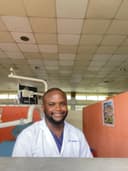
There is a dark joke among Nigerian healthcare workers: the most reliable thing about electricity in Nigeria is its unreliability. For those of us who trained and practiced at the University College Hospital (UCH), Ibadan, this was not a joke — it was a daily reality that shaped how we delivered care, managed emergencies, and thought about the future of medicine in our country.
During my time at UCH, I experienced firsthand the toll that epileptic power supply takes on a healthcare system. The term "epileptic" is used colloquially in Nigeria to describe power that comes and goes unpredictably — sometimes for minutes, sometimes for hours, sometimes not at all for an entire day. For a dental practitioner, this is not merely an inconvenience. It is a clinical hazard.
When the Light Goes Out Mid-Procedure
Imagine you are performing a root canal treatment. The patient is reclined, mouth open, rubber dam in place. You are navigating the delicate canal system of a molar with a rotary file, guided by the overhead dental light and the display of your apex locator. Suddenly, everything goes dark. The overhead light, the suction unit, the compressor powering your handpiece — all dead. The patient flinches. You freeze.
This is not a hypothetical scenario. It happened to me and my colleagues at UCH more times than I care to count. The immediate priority is patient safety: reassure the patient, stabilize whatever instrument is in the canal, and wait. Sometimes the generator kicks in within seconds. Other times, you wait five, ten, fifteen minutes in a room lit only by the glow of a mobile phone torch held by a helpful colleague or nurse.
The dental chair itself is electrically powered. Without electricity, it cannot be raised or lowered. The compressor that drives the air rotor handpiece — the high-speed drill used for almost every restorative and endodontic procedure — requires a reliable power source. The suction unit that keeps the oral cavity clear of water and debris during procedures depends on electricity. The autoclave that sterilizes instruments between patients runs on electricity. When the power is epileptic, every single aspect of clinical workflow is disrupted.
The Generator Dependency
UCH, like most Nigerian hospitals, relies on backup generators. But generators are not a perfect solution. They are expensive to fuel — and at a teaching hospital managing tight budgets, diesel allocation for the dental department is not always a top priority when the surgical wards and intensive care units are competing for the same limited resources.
Even when generators are available, the changeover process creates gaps. Those few seconds or minutes between the public power going off and the generator coming online can be critical. Dental light-curing units need consistent power to properly polymerize composite restorations — a power interruption during curing can compromise the integrity of a filling. Digital X-ray systems can lose unsaved images. Sterilization cycles interrupted midway must be restarted from scratch, creating delays and instrument shortages.
There were days at UCH when we had to postpone non-emergency procedures entirely because we simply could not guarantee uninterrupted power. Patients who had traveled from other cities for their appointments had to be rescheduled. The frustration was palpable — for patients and practitioners alike.
Adapting and Improvising
Nigerian healthcare workers are among the most resourceful in the world, and this is not a compliment about talent — it is a commentary on the conditions that force us to improvise constantly. At UCH, we developed strategies to work around the power problem.
We learned to batch our procedures, scheduling the most power-dependent treatments during the hours when electricity was most likely to be available. We kept fully charged rechargeable LED headlamps in the clinic as backup lighting. We invested in battery-powered curing lights. We maintained manual instruments as alternatives to electrically powered ones where possible — a practice that felt like stepping back in time but was sometimes the only way to complete a procedure.
We also became experts at rapid treatment planning. When the power was on, you worked quickly and efficiently, knowing that you might lose it at any moment. This urgency, while stressful, sharpened our clinical skills in ways that more comfortable environments might not have.
The Bigger Picture
The epileptic power supply at UCH is not unique to that institution. It is a reflection of Nigeria's broader infrastructure challenge. According to the World Bank, Nigeria's per capita electricity consumption is among the lowest in the world. The national grid is plagued by insufficient generation capacity, aging transmission infrastructure, and distribution losses. For a country of over 200 million people, the installed generation capacity is a fraction of what is needed.
The impact on healthcare is devastating and underreported. Beyond the direct clinical consequences, unreliable power affects the cold chain for vaccines and medications, the functionality of diagnostic equipment, the operation of laboratory services, and the ability to maintain sterile environments. It contributes to the brain drain as young medical and dental professionals seek to practice in countries where they do not have to fight the infrastructure just to do their jobs.
What I Carried Forward
My experience at UCH Ibadan was formative in ways I did not fully appreciate at the time. The power challenges taught me resilience, adaptability, and the importance of always having a plan B. They taught me to never take a functioning dental chair for granted. They deepened my respect for colleagues — nurses, technicians, fellow dentists — who showed up every day and delivered care under conditions that would be unimaginable in many parts of the world.
They also fueled my conviction that Nigerian patients deserve better. The talent exists. The dedication exists. What is needed is the infrastructure — reliable electricity, modern equipment, adequate funding — to allow that talent and dedication to translate into world-class patient care.
As I moved on in my career, the lessons from UCH came with me. Every time I flip a switch and the light comes on immediately, every time a procedure goes smoothly from start to finish without a single power interruption, I remember those days in Ibadan. And I remain hopeful that the situation will improve — not just for healthcare workers, but for the millions of Nigerians whose health outcomes are quietly shaped by whether or not the lights stay on.